

The Most Expensive Wine in the World Is Biodynamic
Why the wines at the very top are farmed by the moon
If someone told you that the most expensive wine on the planet was made by a woman who buries cow horns filled with manure in her vineyards, farms by the lunar calendar, and refuses to use a single chemical in her soil, you might raise an eyebrow.
But it is true.
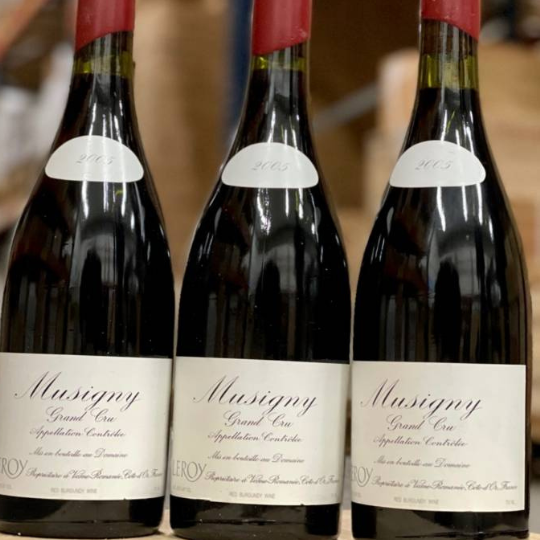
The most expensive wine in the world is the Domaine Leroy Musigny Grand Cru, a biodynamic Pinot Noir from Burgundy. Its average retail price is approaching $50,000 per bottle. That is not a typo. A single bottle of this wine costs more than most cars.
And it is not an outlier. Of the ten most expensive wines in the world, according to Wine-Searcher’s 2025 rankings, six are produced by one winemaker — Lalou Bize-Leroy — across her two estates, Domaine Leroy and Domaine d’Auvenay. Both are 100% biodynamic. The remaining wines on the list include Domaine de la Romanée-Conti, which converted its entire estate to biodynamic farming in 2007, and Domaine Leflaive, another committed biodynamic producer.
In other words, biodynamic wine does not just compete at the top of the wine world. It dominates it.
The Numbers
Here is what the top of the wine market looks like in 2025. Every price is the global average retail price per bottle:
1. Domaine Leroy Musigny Grand Cru — $48,715. Biodynamic.
2. Domaine d’Auvenay Bâtard-Montrachet Grand Cru — $25,665. Biodynamic.
3. Domaine de la Romanée-Conti Grand Cru — $23,796. Biodynamic.
4. Domaine d’Auvenay Chevalier-Montrachet Grand Cru — $21,235. Biodynamic.
5. Domaine Leflaive Montrachet Grand Cru — $17,275. Biodynamic.
6. Georges Roumier Musigny Grand Cru — $18,238.
7. Domaine Leroy Chambertin Grand Cru — $16,045. Biodynamic.
8. Egon Müller Scharzhofberger Riesling TBA — $14,250.
9. Domaine d’Auvenay Criots-Bâtard-Montrachet Grand Cru — $13,800. Biodynamic.
10. Domaine Leroy Mazis-Chambertin Grand Cru — $11,950. Biodynamic.
Eight of the ten most expensive wines in the world are biodynamic. Let that sit for a moment.
The Woman Behind the Wines
The name that appears again and again is Lalou Bize-Leroy. She is, by any measure, the most important figure in the world of fine wine alive today — and she is a devout biodynamic practitioner.
Bize-Leroy founded Domaine Leroy in 1988, purchasing vineyards in Vosne-Romanée and Gevrey-Chambertin. From the very beginning, she established 100% biodynamic farming across the entire estate. She also owns Domaine d’Auvenay, a tiny property of just four hectares that produces wines from sixteen appellations, all biodynamic. And for decades, she co-managed Domaine de la Romanée-Conti itself, owning 25% of the estate.
Her approach is uncompromising. Yields are kept to around 15 hectolitres per hectare — a fraction of what most producers allow. The vines are old. The vineyards are ploughed by horse. Every decision in the vineyard follows the biodynamic calendar: planting, pruning, and harvesting are timed to the phases of the moon.
The result is wines of extraordinary purity, intensity, and complexity. Domaine Leroy produces only around 600 cases per year, making these among the rarest wines on earth. That scarcity, combined with the quality, is what drives prices into the tens of thousands.
But here is the thing: Lalou Bize-Leroy did not adopt biodynamics as a marketing strategy. She did not do it because it was fashionable. She did it because she believed, and has spent decades proving, that treating the vineyard as a living organism connected to cosmic rhythms produces better wine. The prices are a consequence of the quality. The quality is a consequence of the farming.
Domaine de la Romanée-Conti: The World’s Most Famous Wine
If Domaine Leroy holds the price record, Domaine de la Romanée-Conti — universally known as DRC — holds the legend. Its history stretches back to 1232. Its flagship wine, from the Romanée-Conti vineyard itself, averages around $24,000 per bottle. At a 2018 Sotheby’s auction, a single bottle of the 1945 vintage sold for $558,000.
DRC experimented with biodynamic farming for seven years before converting the entire estate in 2007. The decision was not taken lightly. This is arguably the most valuable agricultural land in the world — a 1.8-hectare vineyard that produces only around 5,000 bottles per year. Any change in farming practice carries enormous risk.
They converted anyway. Because the wine got better.
Aubert de Villaine, the estate’s long-time co-manager, has spoken about how biodynamic farming enhances what he calls the “perfect eco-system” of the grand cru zone: the drainage, the depth of the soil, the microbiological activity, the way the air moves through the vines. DRC’s approach in the cellar is minimal intervention. The wine is shaped in the vineyard, not the winery. And the vineyard is shaped by biodynamics.
Why Biodynamic Wine Ends Up at the Top
It is worth asking: why do biodynamic wines dominate the most expensive wine list? Is it coincidence? Marketing? Or is something else happening?
Attention to detail. Biodynamic farming demands an extraordinary level of care. Producers observe their vines daily. They track the lunar calendar. They prepare their own composts and herbal preparations. They plough by horse to protect root structure. This level of attention produces healthier vines, lower yields, and more concentrated fruit. The wine reflects the care.
Expression of terroir. Multiple critics and producers have noted that biodynamic wines express their terroir — the unique combination of soil, climate, and place — more transparently than conventionally farmed wines. When you remove chemicals from the equation and let the vine interact directly with its environment, the wine tastes more like where it comes from. At the grand cru level, where terroir is everything, that transparency is priceless.
Soil health. Biodynamic farming prioritises the life of the soil: the bacteria, fungi, insects, and microorganisms that make healthy terroir possible. Conventional farming often strips the soil of this life. Over decades, biodynamic vineyards develop richer, deeper, more biologically active soils. The vines root deeper. The grapes carry more complexity. The wine ages longer.
Philosophy. There is something less measurable at work too. Biodynamic producers tend to be people who care deeply about what they are doing. They are not optimising for efficiency or maximising yield. They are making the best wine the land can produce. That philosophy, sustained over decades, produces extraordinary results.
It Is Not Just Burgundy
While Burgundy dominates the price list, biodynamic producers are making world-class wine everywhere:
Champagne: Louis Roederer, the house behind Cristal, has been converting to biodynamic farming since 2000. Their 2012 Cristal, made entirely from biodynamic grapes, is considered one of the great Champagnes of the century.
Bordeaux: Château Palmer, a leading Third Growth in Margaux, converted to biodynamics in 2014. Château Pontet-Canet in Pauillac, another classified growth, farms biodynamically with Percheron horses.
Alsace: Domaine Zind-Humbrecht, one of the greatest estates in France, has been biodynamic since 1998. Marcel Deiss and Domaine Weinbach are fellow biodynamic producers making some of the finest Rieslings and Gewürztraminer in the world.
New Zealand: Rippon and Felton Road in Central Otago farm biodynamically and produce Pinot Noir that rivals Burgundy at a fraction of the price.
South America: Seña in Chile (a joint venture between Eduardo Chadwick and the late Robert Mondavi) and Bodega Chacra in Patagonia are producing biodynamic wines that have won blind tastings against the world’s best.
What This Means for the Rest of Us
You do not need $50,000 to drink biodynamic wine. You do not even need $50. The point of this story is not that biodynamic wine is expensive. It is that the people who have the resources, knowledge, and experience to make the best wine in the world — the people with access to the greatest vineyards on earth, the people who have been making wine for generations — chose biodynamics. Not because it is trendy. Because it works.
That same philosophy scales down beautifully. A biodynamic Beaujolais from Domaine des Garçons for under £15. A Pét Nat from Ricardelle de Lautrec for around £12. A biodynamic Alsace Riesling from Zind-Humbrecht for £20. These wines are made with the same principles as the $50,000 bottles: respect for the soil, attention to the moon, minimal intervention, and a belief that the vineyard knows best.
The next time someone tells you that biodynamic wine is woo-woo, or a fad, or pseudoscience, you can tell them this: the most expensive wine on earth is farmed by the moon. And it costs $50,000 a bottle because it is better than everything else.
Biodynamic is not woo-woo. The wine speaks for itself.
Taste Biodynamic Wine With Us
At Vino Cosmo, every wine we pour is biodynamic. Our moon-aligned tastings feature producers like Ricardelle de Lautrec and Domaine des Garçons — wines made with the same philosophy as the world’s most celebrated estates, at prices that let you experience biodynamic quality without the grand cru price tag.
Follow @vinocosmo on Instagram for upcoming events, or sign up for The Cosmic Pour, our bi-monthly newsletter timed to the lunar cycle.